

What Is BackToFrontShow
BackToFrontShow is a platform designed to provide users with specific tools and services depending on its niche. It may be used for content presentation, streaming, business communication, or digital solutions depending on how the service is structured. The platform focuses on delivering performance, reliability, and ease of use. The main goal of the platform is to simplify tasks that normally require multiple tools. Instead of using different services for management, presentation, and communication, users can rely on a single platform. This convenience makes pricing an important factor because customers want to know if the value matches the cost. BackToFrontShow typically offers structured subscription plans. These plans may include basic access, professional features, and enterprise level solutions. Each tier usually provides different limits, such as the number of users, storage space, or access to premium tools. When analyzing backtofrontshow pricing, it is important to consider not only the base price but also what features are unlocked at each level. A lower price may seem attractive, but if it lacks important features, upgrading later may increase overall costs.Overview of BackToFrontShow Pricing Plans
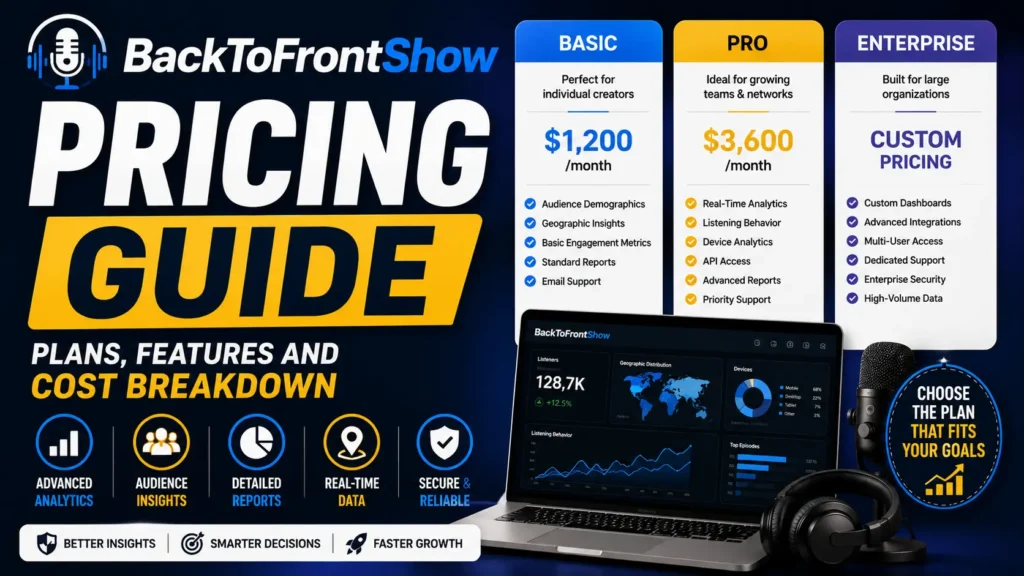
BackToFrontShow usually structures its pricing into multiple tiers. These tiers are designed to serve beginners, professionals, and large teams. Below is a general overview of how pricing levels are often organized.Table 1: BackToFrontShow Pricing Plans Overview
| Plan Type | Best For | Monthly Cost (Estimated) | Key Features | User Limit |
|---|---|---|---|---|
| Basic Plan | Individuals | $10 – $20 | Core features, limited access | 1 User |
| Standard Plan | Small Teams | $25 – $50 | Extended features, priority support | 3–5 Users |
| Pro Plan | Growing Businesses | $60 – $100 | Advanced tools, integrations | 10+ Users |
| Enterprise Plan | Large Organizations | Custom Pricing | Full access, dedicated support | Unlimited |
Features Included in Each Pricing Tier
Each plan under backtofrontshow pricing offers different levels of access. The Basic plan generally includes limited features. These may include access to the main dashboard, basic support, and restricted usage limits. The Standard plan typically adds more functionality. Users may receive additional storage, faster customer support response times, and access to extra tools. This plan is often ideal for small teams who need collaboration features. The Pro plan usually unlocks premium tools. These may include automation features, analytics dashboards, integrations with third party systems, and advanced customization options. Businesses looking to grow often prefer this plan because it balances cost and capability. The Enterprise plan usually provides full access. It may include dedicated account management, custom integrations, higher security levels, and priority technical support. Large companies benefit from this plan because it offers flexibility and scalability. Choosing the right plan depends on how often you plan to use the platform and which features are essential for your workflow.Monthly vs Yearly BackToFrontShow Pricing
Most subscription platforms offer both monthly and yearly billing options. BackToFrontShow pricing may also follow this structure. Monthly plans allow flexibility, while yearly plans usually offer discounts.Table 2: Monthly vs Yearly Comparison
| Billing Type | Average Monthly Cost | Total Annual Cost | Savings | Best For |
|---|---|---|---|---|
| Monthly | Higher | Higher overall | No discount | Short term users |
| Yearly | Lower (discounted) | Lower overall | 10%–25% savings | Long term users |
Hidden Costs and Additional Fees
When reviewing backtofrontshow pricing, it is important to look for possible additional costs. Some platforms charge extra for premium support, extra users, or additional storage. There may also be fees for advanced integrations or customization services. Enterprise customers may need to negotiate pricing based on their specific requirements. Always review the plan details carefully. Make sure you understand what is included and what may require additional payment. Transparent pricing helps avoid unexpected expenses later.Comparison with Similar Platforms
To understand backtofrontshow pricing better, comparing it with similar services can be helpful. Pricing competitiveness plays a major role in customer decisions.Table 3: Comparison with Competitors
| Feature | BackToFrontShow | Competitor A | Competitor B |
|---|---|---|---|
| Starting Price | Affordable | Moderate | Higher |
| Free Trial | Often Available | Limited | Available |
| Advanced Tools | Yes in Pro Plan | Only in Premium | Yes |
| Custom Enterprise | Yes | Yes | Limited |
| Scalability | High | Medium | High |
Pros and Cons of BackToFrontShow Pricing
Understanding strengths and weaknesses helps users make better decisions.Table 4: Pros vs Cons
| Pros | Cons |
|---|---|
| Flexible pricing tiers | Advanced features only in higher plans |
| Affordable entry level plan | Enterprise pricing not always transparent |
| Discount on yearly billing | Possible add on costs |
| Suitable for individuals and businesses | Limited features in basic tier |
| Scalable plans | Customization may cost extra |
Is BackToFrontShow Pricing Worth It
The value of backtofrontshow pricing depends on how you plan to use the platform. If you only need basic features occasionally, the entry level plan may be enough. If you require automation, integrations, and analytics, investing in a higher tier may deliver better long term value. Businesses often consider productivity gains when evaluating pricing. If the platform saves time and improves workflow, the subscription cost can justify itself quickly. For startups and small businesses, starting with a Standard plan and upgrading later may be a smart approach.How to Choose the Right Plan
Selecting the right plan requires analyzing your needs carefully. Consider the following:- How many users need access?
- Do you need advanced integrations?
- Is priority support important?
- What is your monthly budget?
- Are you planning long term usage?