

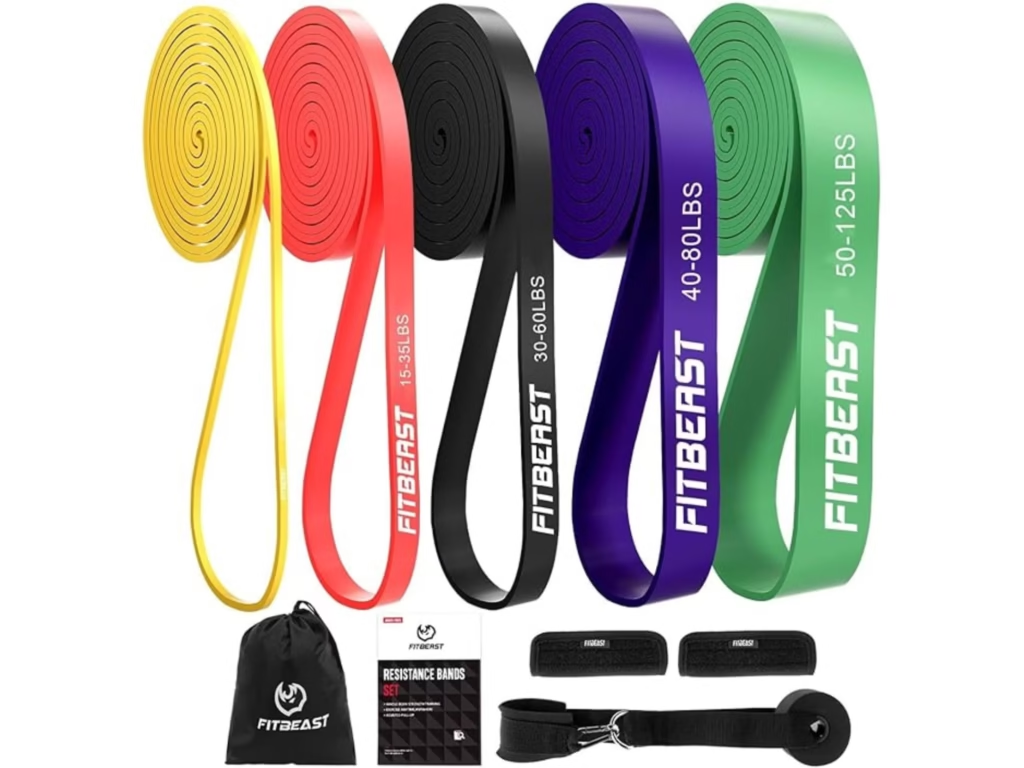
Choosing the right pull‑up resistance bands can make a significant difference in how quickly you progress with pull‑ups and other strength exercises. The thickness of the band determines how much assistance you get: thicker bands provide more help, while thinner bands offer less. Understanding which thickness to buy helps you train safely, build strength efficiently, and gradually learn to pull up resist more of your own body weight.
How Band Thickness Affects Assistance
Resistance bands are typically color‑coded by thickness, with thicker bands offering more assistance and thinner bands offering less. A thicker band stretches more and supports a larger portion of your body weight during a pull‑up, reducing the effort needed. This makes them ideal for beginners who can’t yet perform unassisted reps. Thinner bands provide less assistance, which challenges your muscles more and is suitable as you gain strength and work toward full pull‑ups.
Choosing Your Starting Band
If you’re new to pull‑ups or strength training, start with a thicker pull‑up assist band that offers substantial assistance. This allows you to perform multiple repetitions with controlled form, focusing on proper technique rather than struggling with the movement. Being able to perform quality repetitions trains the muscles needed for pull‑ups while teaching you how to pull up resist tension properly throughout the range of motion.
For many beginners, a heavy‑to‑extra‑heavy band is recommended. These bands typically support anywhere from 60–100+ pounds of assistance, depending on how far you stretch them. The exact resistance varies by brand, but thicker bands generally provide a wider range of support.
Progressing to Medium and Light Bands
As you develop strength and confidence, transition to medium‑thickness bands. These provide moderate assistance—less than thick bands but still enough to help you complete controlled pull‑ups. Working with medium bands forces your back, shoulders, and arms to do more of the work while still giving you enough support to complete multiple reps with good form.
Once you can consistently perform assisted pull‑ups with medium bands, consider moving to lighter bands. These offer minimal assistance, encouraging your muscles to work harder and preparing your body for unassisted pull‑ups. At this stage, learning to pull up resist more of your body weight is key; each repetition with a lighter band demands greater muscle engagement.
Why It’s Often Best to Have Multiple Thicknesses
Many athletes and trainers recommend having a set of bands ranging from thick to thin. This lets you adjust assistance based on your fatigue level, goals for a particular workout, or where you are in your progression plan. For example, you might warm up with a heavier band, train with a medium band, and finish with a lighter band as your muscles fatigue. Having options helps you challenge your muscles appropriately while continuing to progress.
Final Thoughts
Selecting the right pull‑up resistance bands thickness depends on your current strength level and training goals. Beginners will benefit most from thicker bands that provide greater assistance, while intermediate trainees will progress with medium and lighter bands as they learn to pull up resist more of their body weight. Investing in a range of band thicknesses ensures you can adapt your workouts over time and continue improving your pull‑up strength safely and effectively.