


What fappelo Is and How It Operates as a Digital Content Aggregation System
From an infrastructure perspective, high-traffic database performance becomes essential. Viral profiles can generate thousands of concurrent read requests within minutes, forcing the platform to rely on query caching layers and distributed database replication. Without optimized indexing tables and asynchronous fetch routines, page latency would spike dramatically during peak demand. fappelo likely implements layered caching mechanisms that store pre-rendered profile snapshots, reducing the load on primary relational databases. In digital content aggregation systems, the balance between speed, scraping automation, and data privacy in web scrapers determines long-term sustainability. The platform’s operational design reflects that tension between accessibility and compliance.Media Caching Layers and Image Server Bandwidth Optimization
Media-heavy platforms face one primary engineering challenge: image server bandwidth optimization. Unlike text-driven blogs, fappelo handles continuous requests for image thumbnails and embedded video frames. To prevent bandwidth overload, such systems commonly deploy edge-level content delivery networks combined with dynamic image compression pipelines. Instead of serving full-resolution media on initial load, servers generate scaled preview layers, reducing transfer size and accelerating render speed. Proper implementation prevents sudden surges from crippling backend infrastructure. Without CDN-based load balancing, a single viral profile could saturate bandwidth allocation within hours. Another critical component involves cloud storage optimization. Media aggregation platforms frequently utilize object storage clusters segmented by region, distributing static content across multiple nodes. This architecture reduces single-point failure risks and improves geographic delivery latency. For high-concurrency database performance, asynchronous request queuing systems often separate media retrieval from metadata queries. In simpler terms, text-based profile data loads first while image-heavy assets stream progressively. A serious fappelo review must examine these technical dynamics because user experience stability depends more on caching architecture than on interface design. Efficient storage scaling distinguishes sustainable digital content aggregation from unstable mirror networks.Profile Indexing Algorithms and Automated Scraping Pipelines
At the core of fappelo lies its profile indexing algorithms. Automated scraping pipelines collect publicly available data from distributed online footprints, structure it, and attach it to indexed profile entries. The ethical and technical boundary of such automation depends on compliance with robots directives, API permissions, and the broader legal framework for media hosting. When profile indexing algorithms operate without transparent consent signals, data privacy in web scrapers becomes a major concern. Metadata extraction systems must distinguish between legitimately shareable public content and restricted material. Failure to enforce filtering rules increases exposure to legal disputes. Beyond indexing, automated profiling pipelines often rely on pattern recognition models that detect trending names or viral spikes. These systems may prioritize profiles receiving sudden external link references or search interest. That dynamic indexing strategy improves traffic capture but also amplifies high-concurrency database stress. Platforms must implement throttling mechanisms to prevent recursive crawling loops during peak viral moments. In evaluating fappelo profile updates, one must assess whether the platform enforces moderation layers that review automated entries before full publication. Aggregation at scale demands not only speed but governance controls that align with evolving legal standards.Legal Framework for Media Hosting and Content Removal Protocols
The sustainability of fappelo depends heavily on adherence to the legal framework for media hosting. Aggregation platforms operating across multiple jurisdictions must maintain DMCA-equivalent takedown protocols and transparent removal workflows. A credible digital content aggregation system includes structured reporting channels where content subjects can request removal of indexed material. Automated ingestion without responsive removal mechanisms increases litigation exposure. The balance between aggregation speed and compliance responsiveness determines whether a platform operates within acceptable legal boundaries. Content removal pipelines typically involve ticket-based moderation dashboards and verification steps confirming requester identity. For media-heavy platforms, deletion must propagate across cached nodes and edge storage layers. Without synchronized cache invalidation, removed content may continue appearing temporarily through CDN snapshots. Efficient invalidation scripts are therefore critical to maintaining compliance credibility. In any fappelo review, legal transparency should be weighed alongside technical performance. Media platform transparency signals, including clear policy documentation and visible moderation infrastructure, reinforce user trust even in high-volume aggregation systems.fappelo vs Traditional Free Media Hosting Platforms
Example layout of consolemagazine com articles covering hardware architecture reporting and software industry analysis [caption id="attachment_2055" align="aligncenter" width="1024"]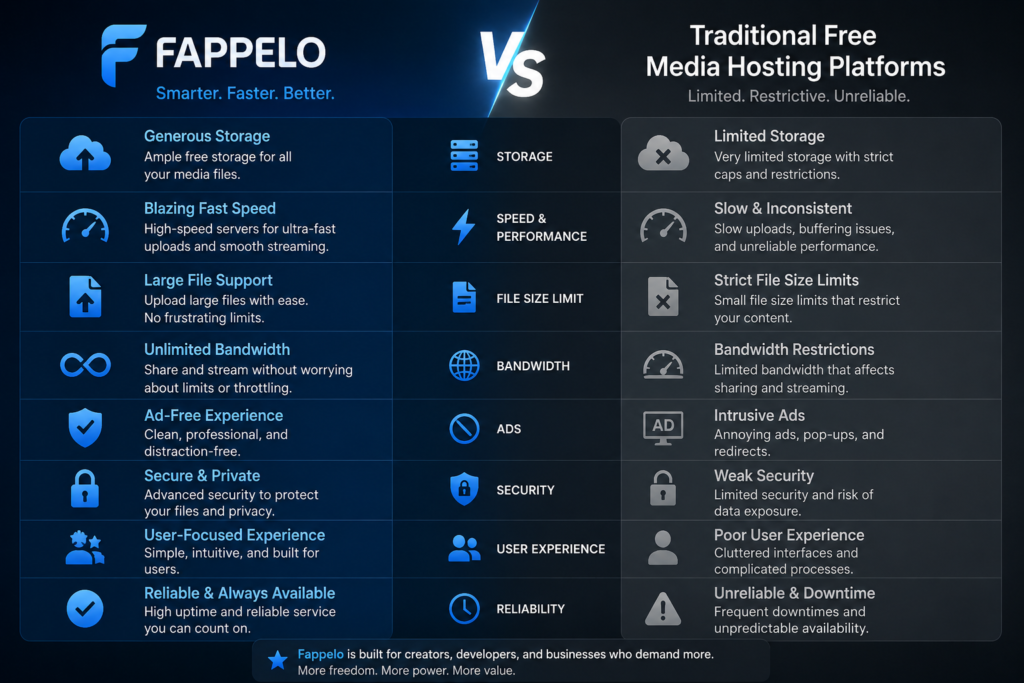 fappelo review showing media caching structure and high traffic database performance[/caption]
Comparing fappelo to traditional free media hosting platforms clarifies operational differences. While hosting platforms focus on empowering creators with content creator dashboards and upload control, fappelo appears to emphasize digital content aggregation rather than creator-centric publishing. Hosting services provide analytics, monetization dashboards, and structured revenue pipelines. Aggregators instead concentrate on discoverability and indexing efficiency. That distinction shapes both monetization models and governance accountability. Web content monetization in aggregation systems often relies on advertising layers rather than creator subscriptions.
Below is a structured comparison table:
fappelo review showing media caching structure and high traffic database performance[/caption]
Comparing fappelo to traditional free media hosting platforms clarifies operational differences. While hosting platforms focus on empowering creators with content creator dashboards and upload control, fappelo appears to emphasize digital content aggregation rather than creator-centric publishing. Hosting services provide analytics, monetization dashboards, and structured revenue pipelines. Aggregators instead concentrate on discoverability and indexing efficiency. That distinction shapes both monetization models and governance accountability. Web content monetization in aggregation systems often relies on advertising layers rather than creator subscriptions.
Below is a structured comparison table:
| Feature | fappelo | Traditional Free Media Hosting Platforms |
|---|---|---|
| Digital Content Aggregation | Primary model | Limited aggregation |
| Content Creator Dashboards | Not central | Core feature |
| Profile Indexing Algorithms | Automated scraping focus | User-upload based |
| Image Server Bandwidth Optimization | CDN dependent | CDN + upload optimization |
| High-Traffic Database Performance | Critical due to viral spikes | Balanced across creator uploads |
| Legal Framework for Media Hosting | Requires strict removal pipeline | Built-in moderation & uploader accountability |
| Web Content Monetization | Primarily ad-driven | Ads + subscriptions + creator splits |
Pros vs Cons of fappelo
A concise evaluation highlights operational strengths and weaknesses:| ✅ Pros | ❌ Cons |
|---|---|
| Fast digital content aggregation engine | Data privacy in web scrapers concerns |
| Optimized image server bandwidth layers | Limited creator dashboard transparency |
| Scalable high-concurrency database design | Legal compliance clarity may vary |
| Efficient profile indexing algorithms | Risk of unauthorized content exposure |
| Rapid fappelo profile updates during viral spikes | Dependence on automated moderation systems |